Why Parents Can’t Trust Products with the Health Star Rating – and What To Choose Instead!
May 17, 2025
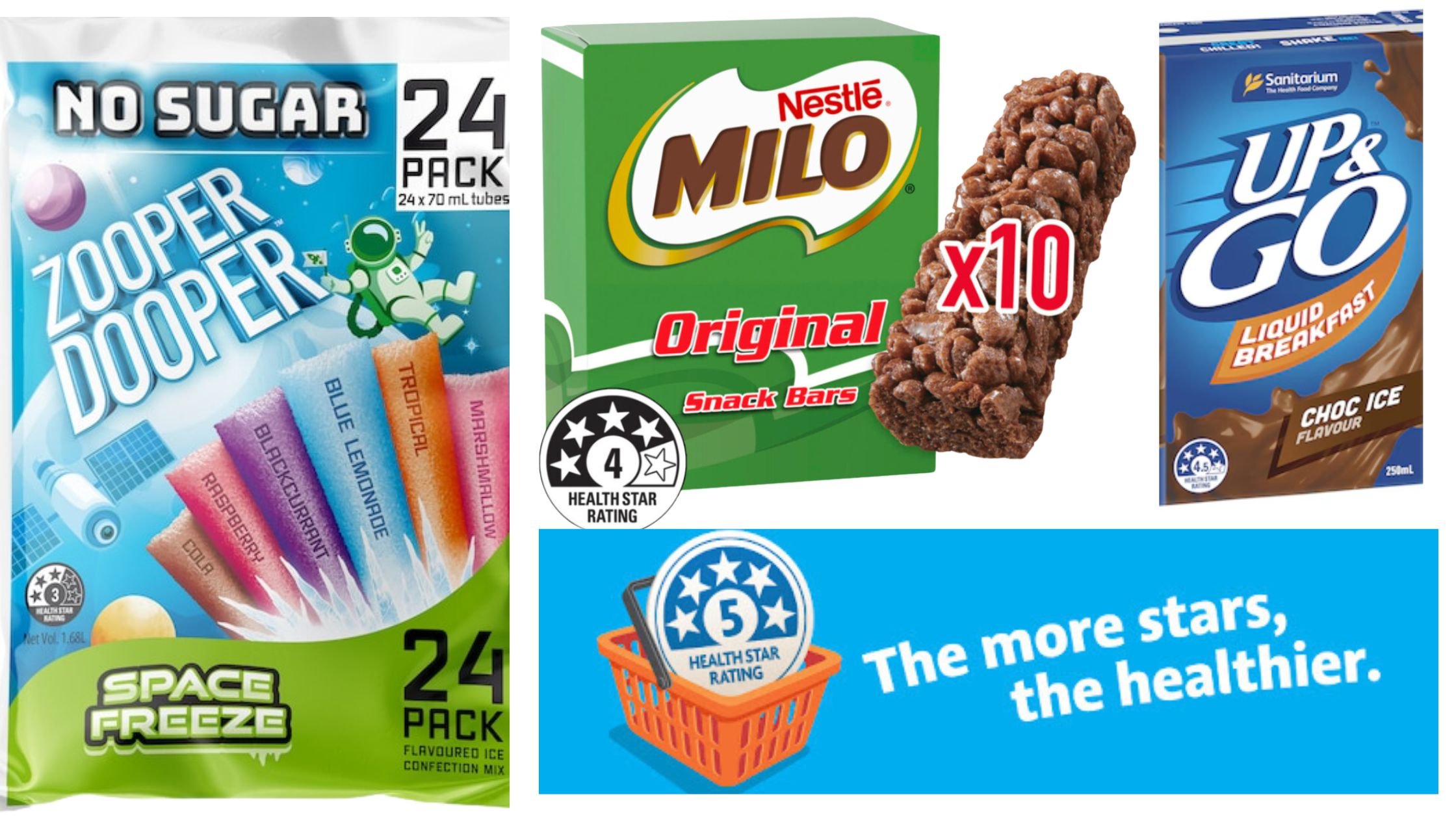
The Health Star Rating is designed to help busy parents make healthy choices—but it’s actually doing the opposite!
You’re standing in the cereal aisle, two boxes in hand, trying to do right by your kids. One has a gleaming 4-star Health Star Rating. You put the other back. Job done.
Except, it’s not. What if the system you’ve been trusting to guide your family’s food choices is actually working against you? What if that 4-star rating is less about nutrition and more about a loophole that processed food companies have been quietly exploiting for years?
That’s exactly what’s happening. And as a parent, you deserve to know the truth.
What iS the Health Star Rating?
Introduced by the Australian government, the Health Star Rating (HSR) was created to help consumers make healthier food choices. It is a self-regulated nutritional rating system that assigns a rating from 0.5 to 5 stars based on the nutritional profile of packaged foods. There is no watchdog to ensure that manufacturers are assigning their products with the correct ratings. It’s designed to compare similar products in a particular category, helping parents to choose between yoghurts, cereals and breakfast bars. It considers both positive nutrients like fibre, protein, and vitamins, as well as negative factors like sugar, sodium, and saturated fat. However, the system has significant flaws. It often overlooks the overall nutritional quality of a product, allowing foods that contain refined sugars, artificial sweeteners, additives, preservatives and other artificial ingredients, and that are low in essential nutrients to receive surprisingly high ratings.
How Ultra-ProCeSSed FoodS Game the StarS!
Here’s the loophole big food companies don’t want you to know about: you can boost your Health Star Rating by simply adding small amounts of vitamins and minerals to an otherwise poor-quality product. Fortify a highly processed food with a dash of calcium or iron, and suddenly your rating climbs, even if the product is loaded with refined sugar, artificial colours, and ingredients you can’t pronounce.
The result? Uncle Toby’s Chewy White Choc Chip Muesli Bars
hold a 4-star Health Star Rating, despite being high in sugar and built on a foundation of highly processed ingredients. Parents see those four stars and reach for the packet with confidence. They’re actually packing their child’s lunchbox with a sugar-heavy, nutrient-poor treat dressed up as a healthy choice.
This isn’t a rare exception. It’s a pattern built into the system itself.
“Ultra-processed foods are often stripped of their natural nutrients and then artificially enhanced to appear nutritious — and the Health Star Rating rewards them for it.” Read this article for more examples of products that game the system.
What the Health Star Rating DoeSn’t Tell You!
The HSR was designed to compare similar products within the same category — not to give you an absolute measure of a food’s quality. It won’t tell you:
1) Whether a product contains artificial sweeteners, colours, or preservatives
2) Whether the ingredients are whole and minimally processed
3) Whether the sugar content comes from whole fruit or refined corn syrup
4) Whether a “fortified” product is genuinely nutritious…or just engineered to look that way
For busy parents trying to make fast decisions at the supermarket, this is a significant blind spot.
What to Look For InStead:
You don’t need a degree in nutrition to shop smarter. Here’s a practical framework to use next time you’re in the supermarket aisle:
1. Flip to the ingredient list first: The ingredient list tells you far more than any front-of-pack rating. Ingredients are listed by weight — what appears first is what’s in there most. If the first three ingredients include any form of added sugar, refined grain, or vegetable oil, put it back.
2. Look for whole foods at the top: Ideally, you want to see real food listed first — whole grains, fruit, legumes, dairy, or vegetables. The shorter and more recognisable the ingredient list, the better.
3. Know sugar’s many names: Sugar is a master of disguise. Watch for dextrose, glucose syrup, corn syrup, maltodextrin, fructose, and sucrose. If sugar appears in the first few ingredients under any name, it’s a product to avoid.
4. Don’t be dazzled by “fortified”: “Fortified with vitamins and minerals” is one of the most overused claims in packaged food marketing. A fortified biscuit is still a biscuit. Focus on foods that are naturally nutrient-dense, not artificially enhanced.
5. Beware the additive numbers: Artificial colours, flavours, and preservatives are common in children’s food products — and some have been linked to behavioural issues and health concerns in kids. If you see numbers on an ingredient list, it’s worth investigating. (Read our guide: How to Read Nutrition Labels Like a Pro.
Smarter SwapS for BuSy FamilieS:
You don’t have to make everything from scratch. You just need to know which supermarket products are actually worth buying. Here are five of our tried-and-tested swaps:
– Instead of Zooper Doopers → Juicies or Pure Pops. Or make your own: Pour 100% fruit juice, a Smoothie, or kombucha into icy pole moulds. Five minutes of effort, zero nasties, and the kids will never know the difference.
– Instead of Up & Go → Oat Milk Goodness OMG Chocolate Protein Oat Milk or Or make your own: A banana and cinnamon smoothie or our Brain Boosting Smoothie takes two minutes, costs less, and actually keeps little ones full until lunch.
– Instead of Milo Muesli Bars → Dinosaur Bars Or make your own: Our Choc Oat Muesli Bars and On-The-Go Breakfast Bars are batch-cook friendly — make a tray on Sunday and lunchboxes are sorted for the week.
– Instead of Nutrigrain → Weetbix, rolled oats, Good Morning Cereal, or Zeally Bay Sourdough Organic Granola Or make your own: Our Choc Rice Cereal, Peanut Butter Granola, or Salted Caramel Porridge will have your kids requesting breakfast. All of these recipes are in our collection.
– Instead of Flavoured Yoghurt Pouches → Barambah Organics Plain Yoghurt, Jalna Full Fat Natural Yoghurt, or Chobani Plain Greek Yoghurt — add a drizzle of honey or a handful of berries and you’re done. Or make your own: Blend plain yoghurt with frozen mango and a splash of vanilla, pour into reusable squeeze pouches, and freeze or try our delicious yoghurt bowls. Genuinely delicious and a fraction of the sugar.
Why We Built the Real Food Rating!
The HSR was built for a food landscape that no longer exists. Even as it moves toward being mandatory, it will still evaluate products on a narrow set of nutrients while completely ignoring processing levels, artificial additives, and the real-world quality of ingredients.
That’s why we created the Real Food Rating (RFR). Australia’s first whole food rating system that evaluates products on what actually matters: real ingredients, minimal processing, no hidden nasties, and genuine nutritional value. Unlike the HSR, the RFR can’t be gamed. There’s no shortcut to fortifying your way to a better score. Our methodology looks at the whole picture because that’s what your family deserves. The Real Food Rating app is coming soon — giving you instant, trustworthy ratings at the supermarket shelf, right when you need them most.
Want to Stay One Step Ahead?
Join thousands of Australian parents already making smarter, more confident food choices.
1) Subscribe to our newsletter: for weekly real food tips, new product ratings, and exclusive resources delivered straight to your inbox.
2) Download our Real Food Reset Guide: for our most popular resource for parents who want to shop with confidence. (Available when you subscribe)
3) Explore our Real Food Ratings: for practical, science-backed ratings for busy parents, to take the guesswork out of shopping.
A Note for Food BrandS
With mandatory HSR labelling on the horizon, now is the time to get your formulations right before regulators force the issue.
If your product is genuinely made with whole, real ingredients, the Real Food Certification is a trusted, independently assessed mark that helps you stand out for the right reasons. And if you need help getting there, our food formulation consulting service works with brands who want to lead, not just comply.
Learn more about certification and consulting here!
Mandy is the founder of Real Food Rating and a passionate advocate for transparent food labelling. She works with families and food brands across Australia to champion genuinely nutritious food.
Connect with Mandy on Instagram, TikTok and Facebook.