“Wraps are a staple in many Aussie homes, used daily for lunchboxes, dinners, and snacks. That’s why it’s even more concerning to see ultra-processed wraps being disguised as healthy, everyday options. Despite claims like “wholegrain” or “no artificial colours,” many contain refined flours, synthetic emulsifiers, preservatives, and sodium levels well above safe daily limits. While the occasional additive may not impact the average adult, the cumulative effect of daily exposure, especially for children, is cause for serious concern. At Real Food Rating, we believe it’s unacceptable for brands to self-assign high Health Star Ratings to products that are fundamentally ultra-processed and contain potentially damaging ingredients. An independent authority should be tasked with assessing food quality, using criteria that go beyond marketing spin. Our ratings aim to do just that: provide clear, honest guidance based on what’s really inside.”
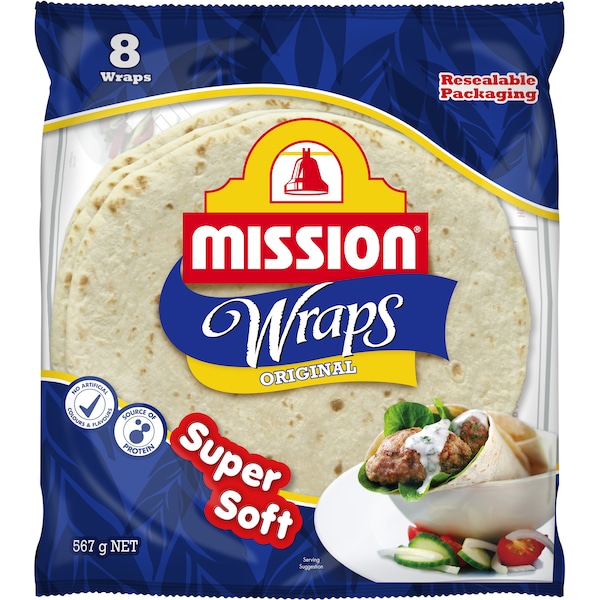
MISSION WRAP WHOLEMEAL
AVOID
“This wrap is a textbook case of health-washing. With claims like ‘source of fibre’, ‘source of protein’, and ‘no artificial colours or flavours’ splashed across the front, it positions itself as a wholesome choice. It contains eight food additives, including mono- and diglycerides of fatty acids (471), linked to heart disease and possible cancer risk, and carboxymethylcellulose (466), a synthetic thickener recently shown in human studies to disrupt the gut microbiome. It also includes calcium propionate (282), a preservative associated with hyperactivity in children, and sorbic acid (200), which may trigger adverse reactions in sensitive individuals. It scores a 1/5 Real Food Rating (RFR). Real food wraps don’t need a long list of additives. This highly processed option is best avoided, especially for growing children or anyone looking to support their gut and overall health.”
“This seemingly innocent ‘plain’ wrap demonstrates how even the most basic commercial bread products have become ultra-processed minefields. Despite appearing simple, it contains a combination of gut-disrupting emulsifiers – both 471 (mono and diglycerides) linked to cardiovascular disease and 466 (carboxymethylcellulose) shown to damage the intestinal barrier in human trials. Combined with two preservatives, industrial vegetable oil, refined wheat flour and high sodium levels, this represents the unfortunate normalisation of industrial additives in everyday staples. Wraps should contain around 4-6 ingredients. This wrap shows how far we’ve strayed from real food. Even without artificial colours, this wrap should be avoided as an everyday staple and that’s why it receives a 1/5 Real Food Rating (RFR).”
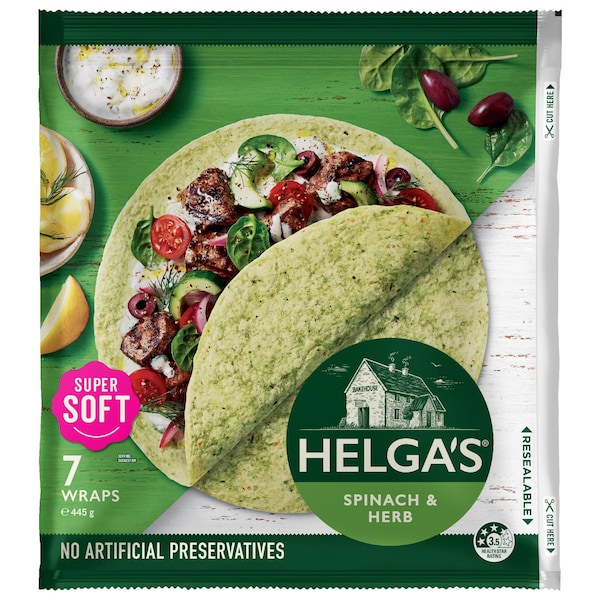
“This wrap is a classic example of misleading marketing designed to trick parents into believing they’re purchasing a healthy vegetable product. The ‘spinach & herb seasoning’ contains less than 0.9% spinach – meaning the actual spinach content is virtually non-existent. Instead of real vegetables providing the green colour, manufacturers have used artificial colours 102 (Tartrazine) and 133 (Brilliant Blue) – both require warning labels in the EU stating they ‘may have an adverse effect on activity and attention in children.’ Combined with gut-disrupting carboxymethylcellulose, cardiovascular-linked mono and diglycerides, plus high sodium levels, this wrap represents everything wrong with ultra-processed food marketing. Parents seeking genuine nutrition should avoid this entirely. It receives a 0.5/5 Real Food Rating (RFR).“
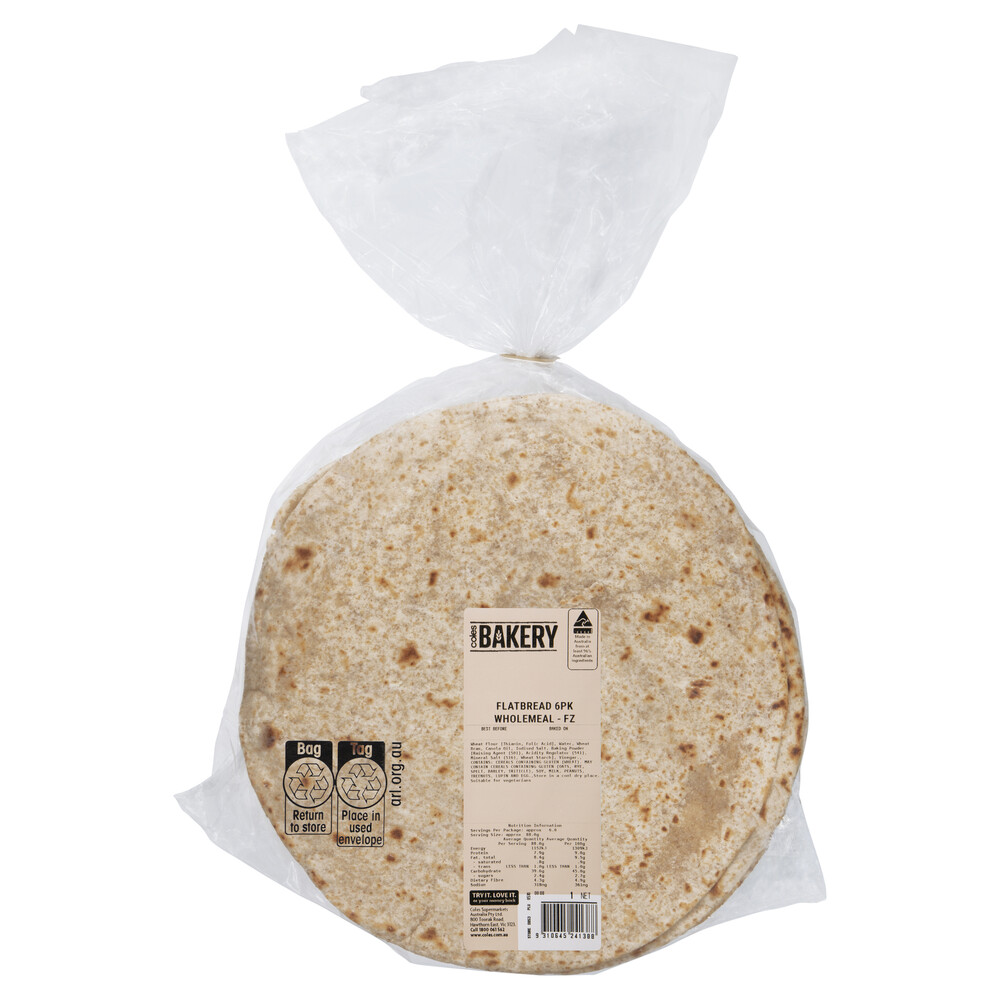
This wrap does avoid some of the additives we often flag in others, such as emulsifiers, preservatives, and gums, which is a genuine positive. However, it still relies on ultra-processed ingredients, including refined vegetable oil and sodium aluminium phosphate (541), which contributes to excess dietary phosphate and aluminium intake. What’s most concerning is the misleading “wholemeal” claim. Rather than using true wholemeal flour, the manufacturer starts with refined flour that has been stripped of its natural nutrients, then fortifies it with synthetic vitamins and adds wheat bran back in separately. This clever formulation trick allows them to market it as wholemeal when, in reality, it’s not. A truly wholemeal wrap would be made simply from real wholemeal flour – not such a novel concept, you’d think. A 3/5 Real Food Rating (RFR) is where this wrap lands.
“This wrap shows some potential, with moderate sodium levels and no artificial colours, but key concerns outweigh the positives. The inclusion of cultured dextrose (a preservative that functions like propionates), emulsifier 471 (mono- and diglycerides), which emerging research links to cardiovascular risk and gut microbiome disruption and a potassium and aluminium-containing mineral salt (541), raises red flags. The use of vegetable shortening and multiple processing aids further undermines its claim as a healthy staple. It gets a 2.5/5 Real Food Rating (RFR) and should be limited wherever possible rather than added as a daily lunchbox go-to. Families will always be better served by simpler homemade or local bakery wraps made with just a few real ingredients.“
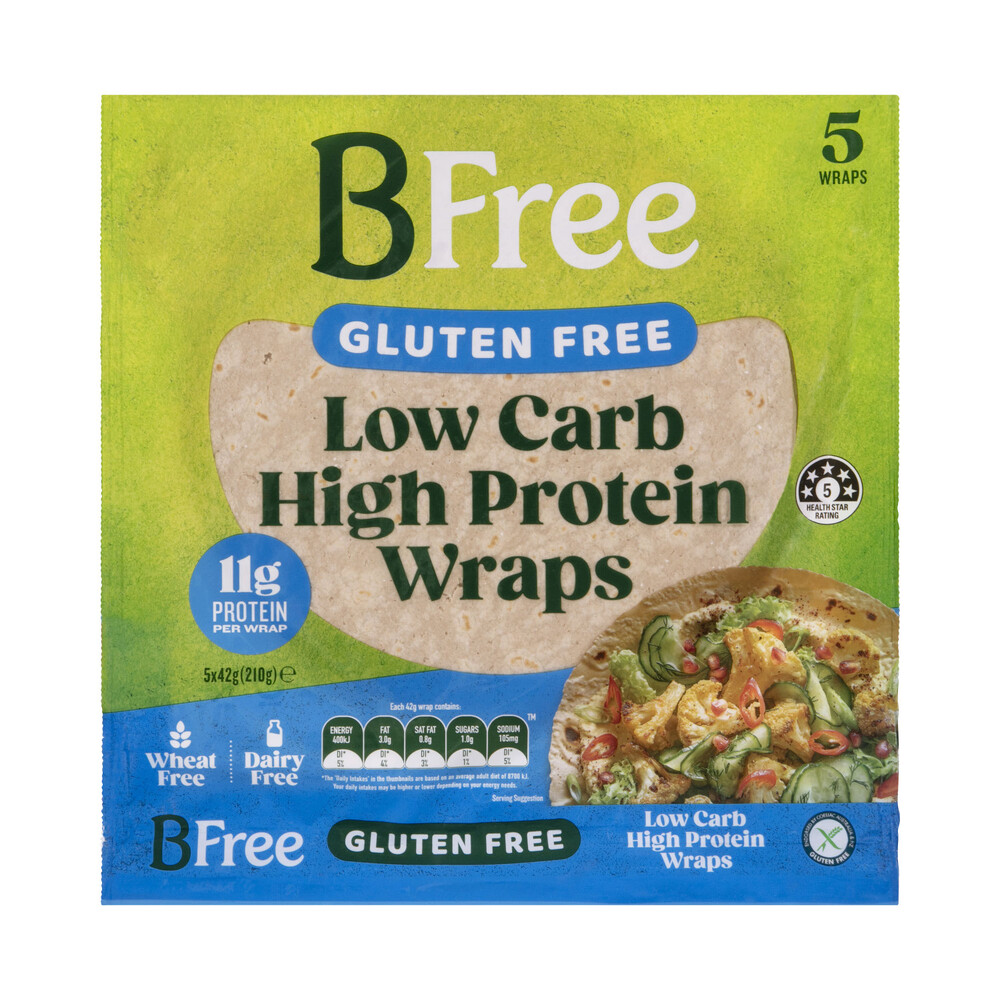
“This wrap intends to impress with high protein and fibre statistics whilst hiding an ultra-processed minefield of concerning ingredients. With its perfect 5/5 Health Star Rating this is what the government wants us to believe is the ideal wrap. It contains a potential gut-disrupting emulsifier, two preservatives that may affect behaviour and cause skin issues, a highly refined isolated protein and other additives that have no place in basic bread. Despite containing only 22% wholemeal flour, it markets itself as a healthy choice whilst representing everything wrong with modern food science – creating laboratory formulations that appear nutritionally superior but are fundamentally disconnected from real food. It’s no surprise that it receives a 1.5/5 Real Food Rating (RFR).“
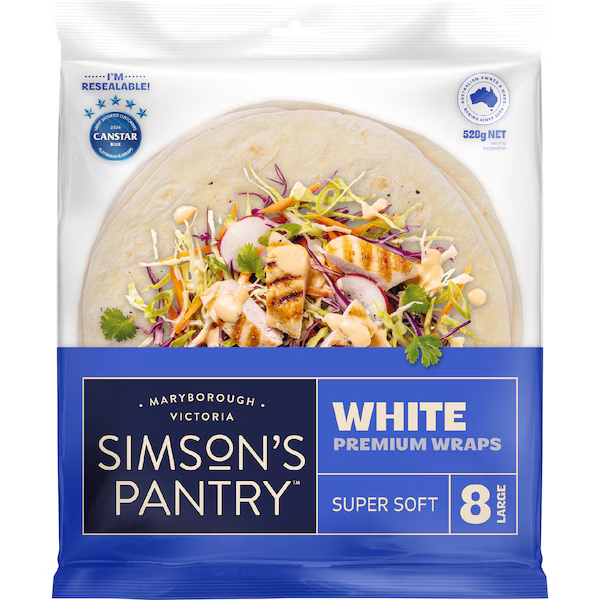
“These wraps sit firmly in the ‘LIMIT’ category. The main red flag is that vegetable shortening is in position 3, plus 9 different ingredients, including several additives. This places them firmly in the white ultra-processed wrap category, with a 2.25/5 Real Food Rating (RFR). They are best limited wherever possible. They also contain sodium aluminium phosphate (541), which adds to dietary phosphate and aluminium intake, and while direct human evidence of neurological harm from this additive is lacking, excess phosphates and aluminium have been associated with kidney stress, weakened bones, and potential brain health risks, especially in sensitive individuals.”
HELGA'S TRADITIONAL WHITE WRAPS
LIMIT
“Don’t be fooled by the word “traditional” on the pack, this white wrap is far from a simple staple. Made with refined wheat flour and multiple industrial additives, it’s more ultra-processed than the branding suggests. While it includes a touch of wholemeal flour and added vitamins, the rest of the ingredient list is designed for shelf life, not nourishment. What’s particularly concerning are the emulsifiers 471 (mono- and diglycerides) and 481 (SSL – sodium stearoyl lactylate). These are commonly used in processed baked goods to improve softness and extend freshness, but recent studies are calling their safety into question. A 2023 BMJ study and a 2024 PLOS Medicine paper found links between high intake of these emulsifiers and disruptions to gut health, low-grade inflammation, and even increased cancer and heart disease risk. While these findings are still observational, the fact that children are regularly exposed to these additives through white bread, wraps, and snacks means we should be paying closer attention. When a wrap like this is eaten every day, especially by children, it’s not just the refined flour that’s an issue, but the cumulative exposure to additives we don’t fully understand. At least this wrap’s health claims are not inflated with a high health star rating. At least this wrap’s health claims are not inflated with a high health star rating. It receives a 2.25/5 Real Food Rating (RFR).”
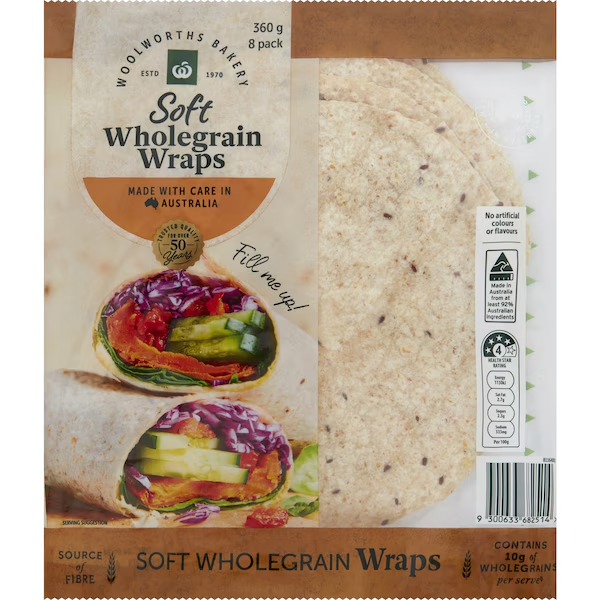
“At first glance, this wrap may appear like a better option thanks to its “wholemeal” labelling and 49% wholemeal wheat flour content. But beyond that, it’s still a highly processed product with refined wheat flour, added vegetable oil, and nine additives packed into each wrap, including emulsifiers (471, 481), humectants, raising agents, and stabilisers. While the fibre content is reasonable (6.6g/100g), it’s important to note that much of it is likely the result of formulation, not from truly intact wholegrains or sprouted ingredients. Children and adults alike are regularly exposed to additives like mono- and diglycerides of fatty acids (471) and sodium stearoyl lactylate (481) in commercial baked goods, yet emerging studies are raising red flags about their impact on gut health and long-term disease risk. With the addition of processed oils and synthetic raising agents, this wrap still falls into the ultra-processed category, despite the cleaner marketing. It may be a step up from the other white processed wraps, but it’s far from a real food upgrade. It earns a 2.75/5 Real Food Rating.“
“This wrap is marketed as a spinach option, but the actual spinach content is just 1%. It appears after refined vegetable oil, which is the third ingredient, and adds little real nutrition to the product. Despite this, the spinach claim is front and centre on the packaging, making the marketing misleading. The ingredient list also includes several additives like emulsifiers 471 and 481, stabiliser 412, humectant 422, and an acidity regulator, which are all signs of heavy industrial processing. One small positive is the use of natural colours to create its green tint. This is a better choice than brands like Mission, which use artificial colouring in their spinach wraps. However, colouring doesn’t improve the nutritional quality. While the sugar content is low, the fibre is modest, and the sodium is relatively lower than many commercial wraps, the overall picture tells a different story. With its base of refined flour, processed oils, and synthetic additives, this wrap still belongs in the “LIMIT” category according to the Real Food Rating System.“
“As an everyday staple, this product is concerning. Additives like these may be expected in ‘sometimes’ foods such as pastries or bakery treats, but not in a family’s daily wrap. What looks like a nourishing multigrain option is in fact made with refined flour, industrial fats, and nine additives. Calcium propionate has been shown in clinical trials to trigger irritability and sleep issues in children, while emulsifiers such as mono- and diglycerides (471) are now strongly linked with gut microbiota disruption, low-grade inflammation, and higher risks of chronic disease. Sorbic acid, another preservative, may cause irritation with frequent use, adding to the overall burden. Despite this, it still earns four Health Stars—highlighting how the system rewards numbers on a label while ignoring the reality of additives and processing. That’s why it receives just 1.75 out of 5 in the Real Food Rating.“
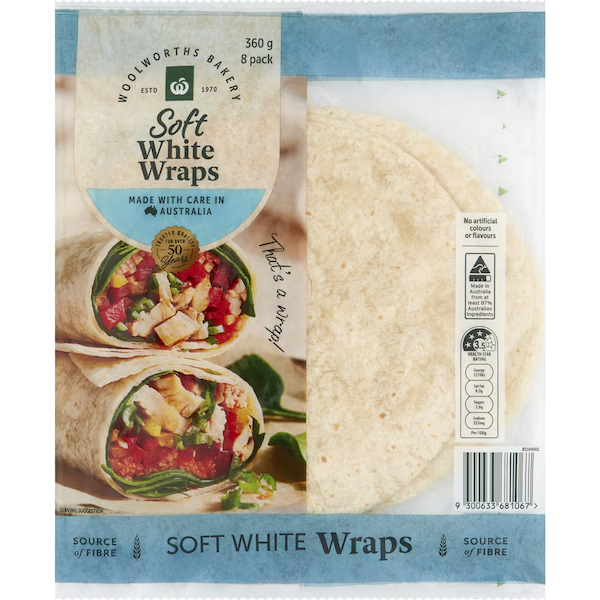
“This white wrap may look simple, but it’s anything but. It’s made mostly from refined flour, then heavily processed with synthetic additives, stabilisers, preservatives, and industrial fats. It contains nine additives, many of which are linked to health risks when eaten regularly, especially in growing children. Calcium propionate is a concerning additive: a clinical trial in preschoolers found it triggered restlessness, inattention, and sleep disturbances, with symptoms reversing once the preservative was removed. Sorbic acid has been linked to digestive irritation, skin reactions, and even DNA damage under lab conditions. Mono- and diglycerides (471) are now being investigated for links to gut microbiome disruption, chronic inflammation, and long-term cancer and heart disease risk. Despite these concerns, the wrap earns a 3.5-star Health Star Rating, which it doesn’t deserve The rating rewards numbers like low sugar or added fibre, but ignores ultra-processing and additive burden. For families who rely on wraps daily, this creates a false sense of health in a product that is far from nourishing. As a once-off these types of additives will have little effect on the majority of people but when they present in our daily staples, there is need for concern and products like these be avoided for anyone aiming to eat real food and eliminate additives in their families diets.“
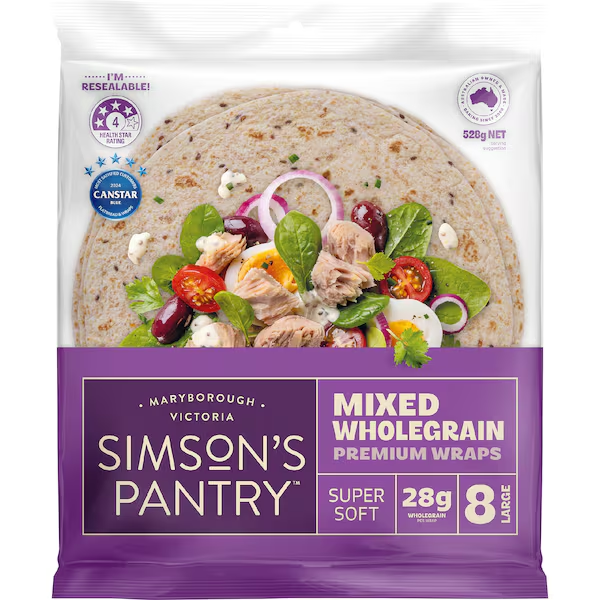
“Despite the appearance and marketing of “wholemeal” and “multigrain,” this wrap is, unfortunately, a textbook ultra-processed food. Ingredient analysis reveals that the predominant base is refined wheat flour, with only 28% wholemeal content. The presence of palm oil-based vegetable shortening as a key ingredient (with industrial emulsifiers like 471 – listed twice – and 481) flags both heavy processing and environmental concerns. The bread also relies on a cocktail of additives: multiple emulsifiers, preservatives, humectants, and thickeners. While the nutrition panel boasts excellent fibre (8g/100g), solid protein, and low sugar and fat for the category, the overwhelming burden of industrial processing and additives, especially the use of high concern preservatives mixed with cautionary additives, completely sinks its Real Food Rating. This is the kind of product that families seeking truly nourishing, minimally processed options should avoid. No matter how good the fibre or protein is, the risks from the additive and processing load dominate.“
“This is a classic example of an ultra-processed wrap marketed for convenience, but built mainly from refined wheat flour and palm oil-based vegetable shortening. While the fibre and sugar may look “okay” on a nutrition label, the heavy industrial processing, use of palm oil, and cocktail of artificial additives make this a product to avoid if you’re looking for real food quality or supporting gut and metabolic health.“
“This chickpea-based wrap markets itself as a high-protein, plant-led option, yet behind the glossy nutrition panel lies a highly engineered product. Instead of whole chickpeas and vegetables, it relies on protein isolates, starches, and synthetic fibres such as cellulose and carboxymethylcellulose—additives that inflate fibre numbers but don’t act like natural fibres in the body, with research linking some (like carboxymethylcellulose) to gut disruption and inflammation. It also contains cultured dextrose, essentially a hidden form of propionates that once prompted an ACCC complaint against Helga’s, alongside sorbic acid. The concerning part is that it appeals to health-conscious consumers searching for nutrient-dense options, yet it is more about clever marketing than genuine nourishment. And while the Health Star Rating system rewards it with 5 stars, our Real Food Rating tells the real story: 2.25/5 (RFR) for its ultra-processed profile and heavy reliance on additives.”
“This product tries to position itself as a plant-powered, fibre-rich wrap alternative, but the ingredient list is not what you’d expect to see. While it includes some promising wholefood ingredients like chickpea flour, flaxseed, and psyllium husk, it’s also heavily reliant on protein isolates, gums, acids, emulsifiers, propionates and a sorbate containing preservative that it firmly into ultra-processed territory. The use of mono- and diglycerides (471), linked in large observational studies to gut microbiome disruption and cancer risk , is concerning, especially for a product marketed as a better-for-you option. This wrap may look nutritious on the outside, but its formulation is more functional than nourishing. It’s an example of food engineered for health halos, not real nourishment.“
“Despite a “good” fibre number on the label, this wrap is a textbook example of how ultra-processed foods game nutrition panels. Refined wheat flour and palm oil make up most of the ingredients, accompanied by at least eight additives: emulsifiers, gums, raising agents, and preservatives. Palm oil is not only an environmental concern but also a clear marker of industrial food processing. What is most misleading is the fibre. It is not from real whole grains but is largely contributed by added industrial bulking agents like carboxymethylcellulose (466), a synthetic fibre not found in traditional food that is used purely to artificially inflate the fibre content. Emerging research indicates this synthetic fibre is not metabolised like natural food fibres and may disrupt the gut microbiome or even promote gut inflammation in some people. Other concerning additives are present, including two high concern preservatives for sensitive children. While the fibre, protein, and sodium may appear acceptable, in reality their improvement is engineered and does not offset the risks posed by synthetic bulking agents and a high chemical additive load. This wrap is not a real food choice. If you want genuine nutrition and real fibre, choose wraps with just three to five ingredients, such as 100% wholemeal, legume, or seed flours, water, and salt. This wrap gets a 1.5/5 Real Food Rating (RFR).“
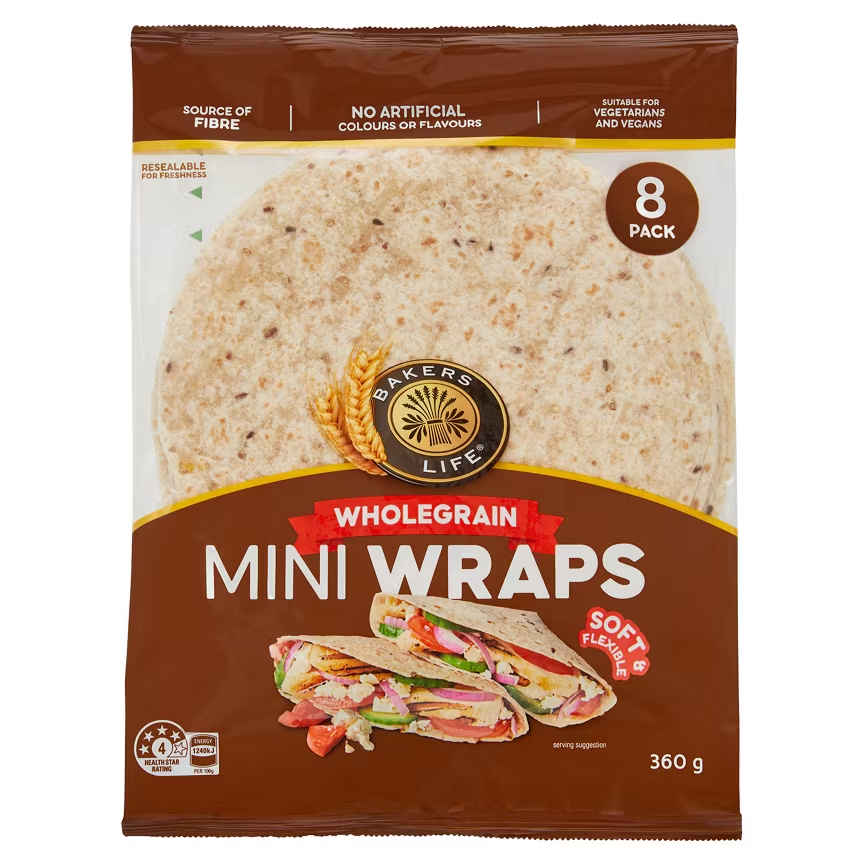
“Although these mini wraps are marketed as a healthy, wholemeal option for children’s lunchboxes, the ingredient list tells a different story. Only 25% of the flour is actually wholemeal, with the remainder made up of standard refined wheat flour. While the fibre content is higher than some competitor products, at 7.1g per 100g, the truth is this wrap is a highly engineered ultra-processed product. These wraps contain palm oil-based fat, both as shortening and in dough conditioners, a red flag for industrial processing and environmental sustainability. The inclusion of several synthetic emulsifiers (notably 471 and 481), humectants, raising agents, and a long list of minor additives are all there to maintain softness and extend shelf life, not to provide genuine nutrition.Of particular note are the use of mono- and diglycerides (emulsifier 471), which the latest research links to increased cardiovascular disease risk and gut microbiota disruption—a worrying prospect for growing children. Preservative 281 (sodium propionate) and 200 (sorbic acid) are both included to stave off spoilage, but are associated with behaviour, sleep, and gut issues in some children, as well as potential irritation and even allergic-type reactions. While the sugar level is low and the label is transparent, these wraps ultimately represent an ultra-processed convenience food, not a real food staple.Despite the wholegrain and fibre marketing, this mini wrap remains a product of industrial design, heavily reliant on synthetic additives and palm oil, and is simply not suited to regular lunchbox rotation for children or anyone seeking the benefits of truly whole food. If you’re aiming for real nutrition and gut health for your family, simple, short-ingredient wholegrain wraps will always be the better choice.“
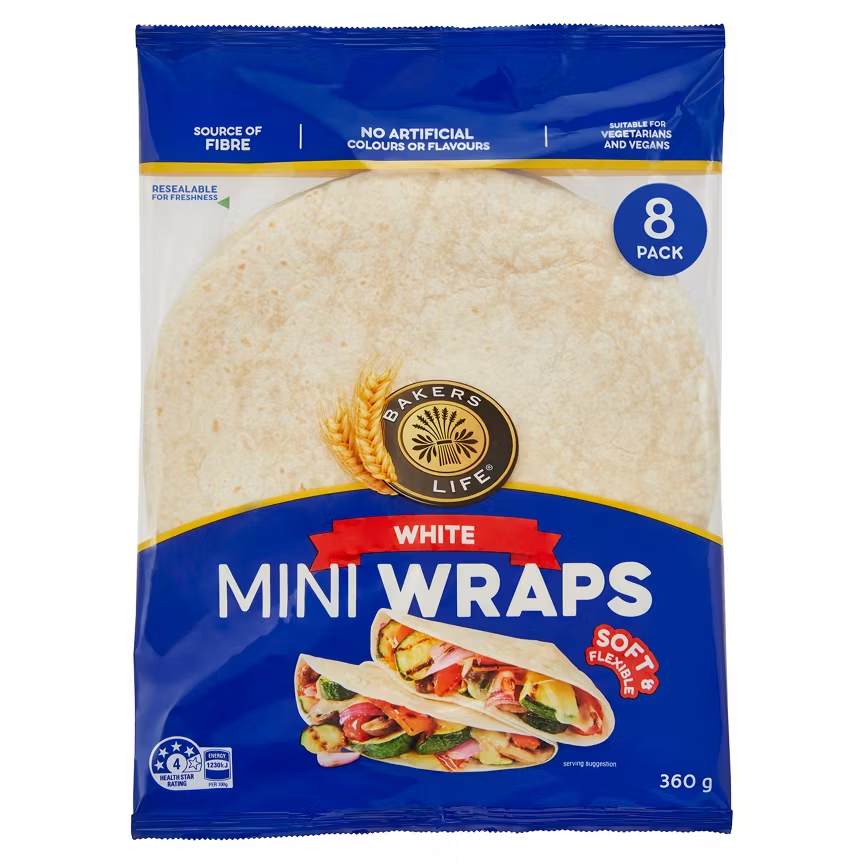
“At first glance, these ‘mini’ white wraps look like a convenient lunchbox staple, but the ingredient panel tells a very different story. The main ingredients are refined wheat flour, water, and palm oil-based shortening. It contains preservatives, included to extend shelf life, particularly sodium propionate. It also contains mono- and diglycerides of fatty acids, known as emulsifier 471, which are linked in major studies (BMJ 2023, Nature 2015) to increased cardiovascular disease risk and disruption of the gut microbiome. Aside from the shortening, it contains more palm oil in the dough conditioner, further signalling the industrial origin and sustainability issues of the product. While the sugar content is low and oat fibre is preferable to engineered cellulose gums, this wrap is made almost entirely from refined wheat, palm fat, and a chemical maze, designed for softness and shelf life, rather than true nutrition. These wraps should not be a regular part of children’s diets or anyone seeking genuine, whole food nutrition. No surprise that it receives a 1.5/5 Real Food Rating (RFR) very different to the 4/5 Health Stars.“
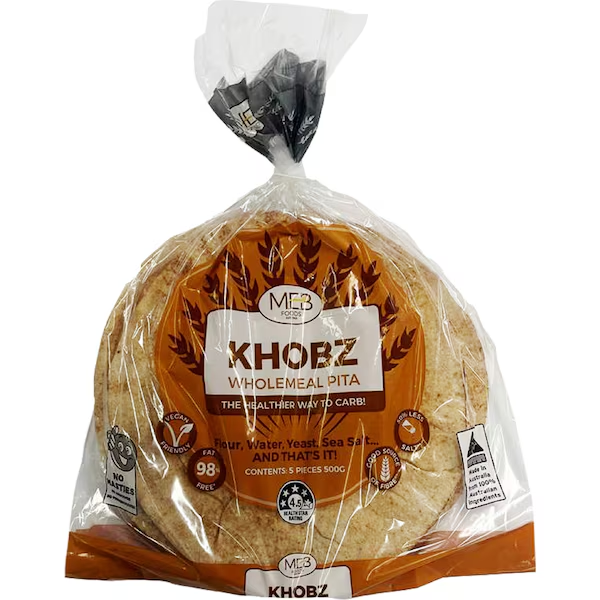
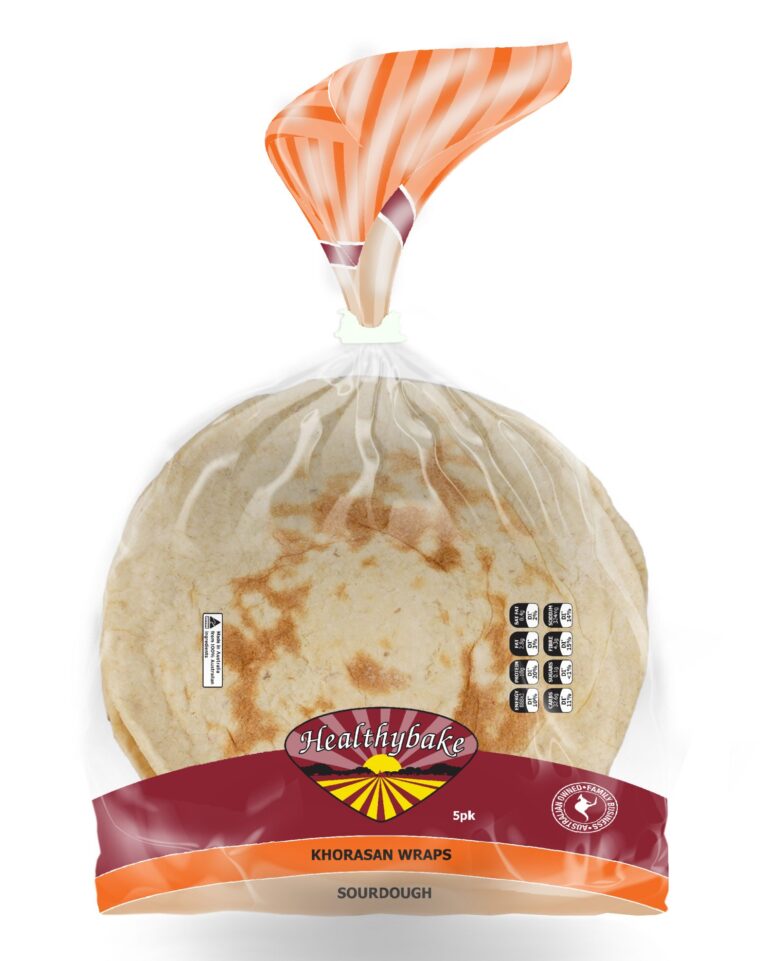
“This wholemeal pita wrap shows that commercial wraps can come close to real food standards. With simple, recognisable ingredients — wholemeal wheat flour making up a generous 67%, water, yeast, iodised sea salt, and vitamins — this loaf proves you don’t need ultra-processed additives or industrial processing to make a nutritious, family-friendly staple. The high fibre and protein levels, minimal sugar, and moderate sodium make this bread both wholesome and practical as an everyday choice for parents and anyone seeking genuine nourishment over marketing hype. While traditional sourdough made with organic wholegrain flour, natural fermentation, and sea salt will always be the gold standard for minimal processing and gut health, this wholemeal bread deserves recognition for bridging the gap between convenience and true real food values. This is a worthy hero on the wrap shelf and that is why it gets my 4.5 out of 5 Real Food Rating.“
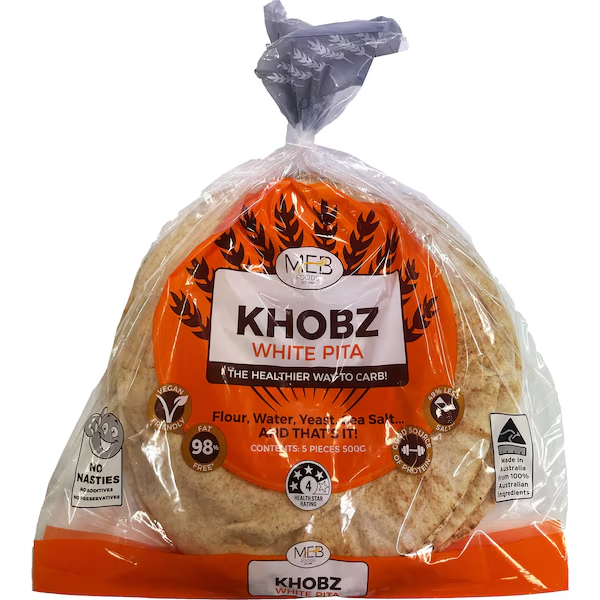
“This is a classic, honest white wheat flour pita wrap, far removed from the highly processed sliced loaves and wraps that often crowd supermarket shelves. Made from just wheat flour, water, yeast, iodised salt, and the standard added vitamins (thiamin and folate), it delivers simplicity for families who want a straightforward, no-fuss staple. While it lacks the generous fibre, minerals, and micronutrients found in wholemeal or sourdough options, it stands out for its lack of industrial additives, preservatives, or hidden processing tricks. This is the type of commercial wrap I look for when parents are dealing with a fussy eater on a white diet. It is a clean, accessible and additive-free. It’s ust not quite the nutritional powerhouse of its wholegrain sibling. Because it still relies entirely on refined white flour, it can’t match the gut health, satiety, or micronutrient profile of wholemeal or slow-fermented sourdough breads. In a field filled with synthetic emulsifiers and conditioners, though, it deserves praise for its honest approach and is a solid everyday choice for most households and free from nasties. That’s why it earns a 3.75/5 Real Food Rating.“
“A near-perfect, minimally processed sourdough bread made with organic ancient grain, true rye fermentation, and olive oil, this loaf stands out as a genuine real food option. The only drawback is the presence of soy lecithin as an emulsifier. While this additive isn’t a deal-breaker and is far from the worst, it can be derived from genetically modified sources, which some shoppers seek to avoid, especially when paying premium prices for artisan-style bread. Even so, in a category often crowded with additives, gums, and ultra-processed ingredients, this loaf is a superb daily choice for families who value real food but still shop at mainstream bakeries or supermarkets. It is a clear step above almost every conventional bread or wrap on the shelf, deserving recognition for bridging convenience and traditional food values.“
“This is a classic real food wrap that stands apart from most commercial flatbreads and supermarket wraps. With rye wholemeal flour making up 70% of the base, and just wheat flour, filtered water, and iodised sea salt rounding out the ingredients, this wrap is refreshingly simple and honest in a world of overcomplicated, additive-laden supermarket options. Wholemeal rye, generally, has a lower glycaemic index, higher fibre content, and more micronutrients than wholewheat flour alternatives. Families looking for authentic, minimally processed wraps will find this a genuine contender in the lunchbox rotation. It earns a 4.5/5 Real Food Rating (RFR).”
“This wrap is a standout in the wraps aisle, simple, honest, and close to real food perfection. With organic wholemeal flour making up 70% of the base and just organic wheat flour, filtered water, and salt to finish, it avoids all the usual industrial additives, gums, preservatives, and hidden ingredients found in most supermarket options. The ingredient list reflects what a wrap should be: recognisable, minimally processed, and organic where it counts. That’s what makes this product one of the best you’ll find on the shelf. The only reason it doesn’t score a perfect 5 out of 5 is the inclusion of some refined wheat flour, and the fibre isn’t quite as high as it should be. This wrap is a top-tier, real-food-friendly choice you can trust and has earned a 4.5/5 Real Food Rating (RFR).“
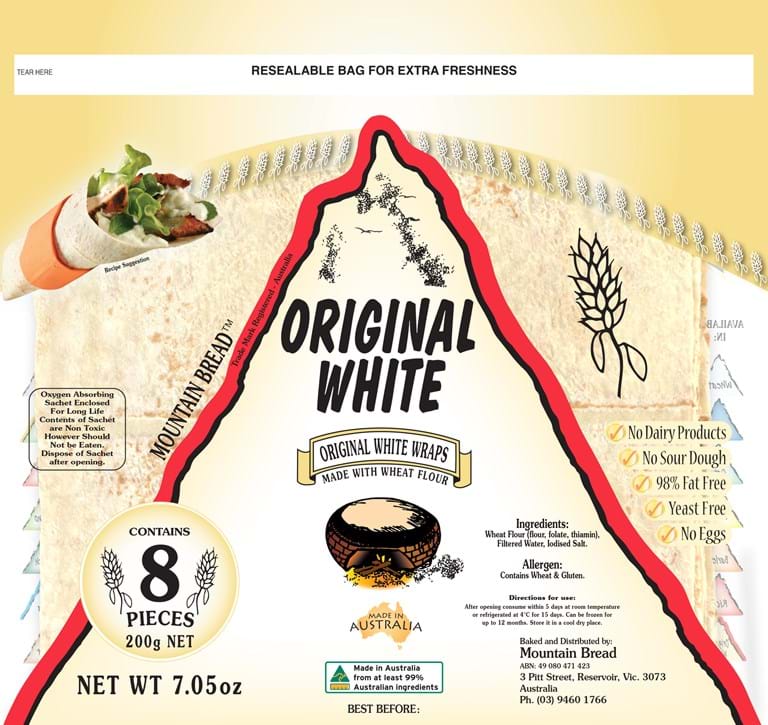
“This classic white wrap earns strong real food credentials for its short, honest ingredient list, free from gums, emulsifiers, and preservatives. The only limitation is that it relies on refined wheat flour, (which is required to be fortified as its been stripped of its natural occuring vitamns and minerals) as the main ingredient, which results in a deduction for processing and lower fibre. If you want a wrap with the very best fibre and gut benefits, try one with 100% wholemeal or sprouted flour. But as simple, additive-free staples go, this is still a much better choice than most supermarket wraps. It’s 3.75/5 Real Food Rating (RFR) focuses on the lack of any harmful additives or ultra-processed ingredients. The best guidance is to fill this wrap with nourishing ingredients to boost the protein and fibre content to ensure a nutriitionally balanced meal.“
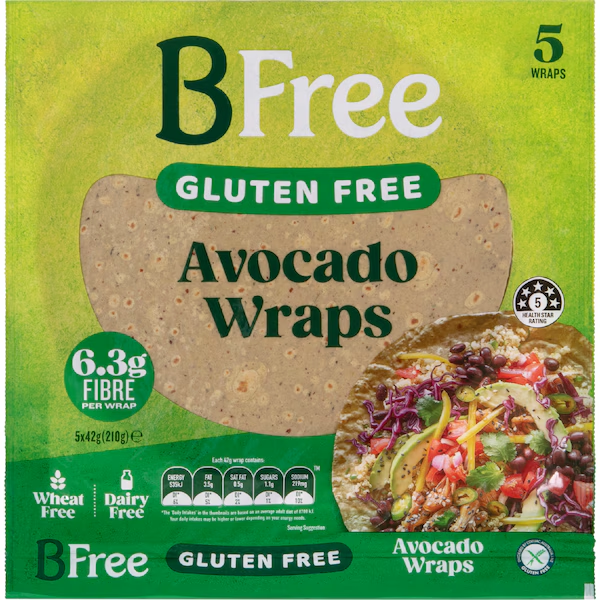
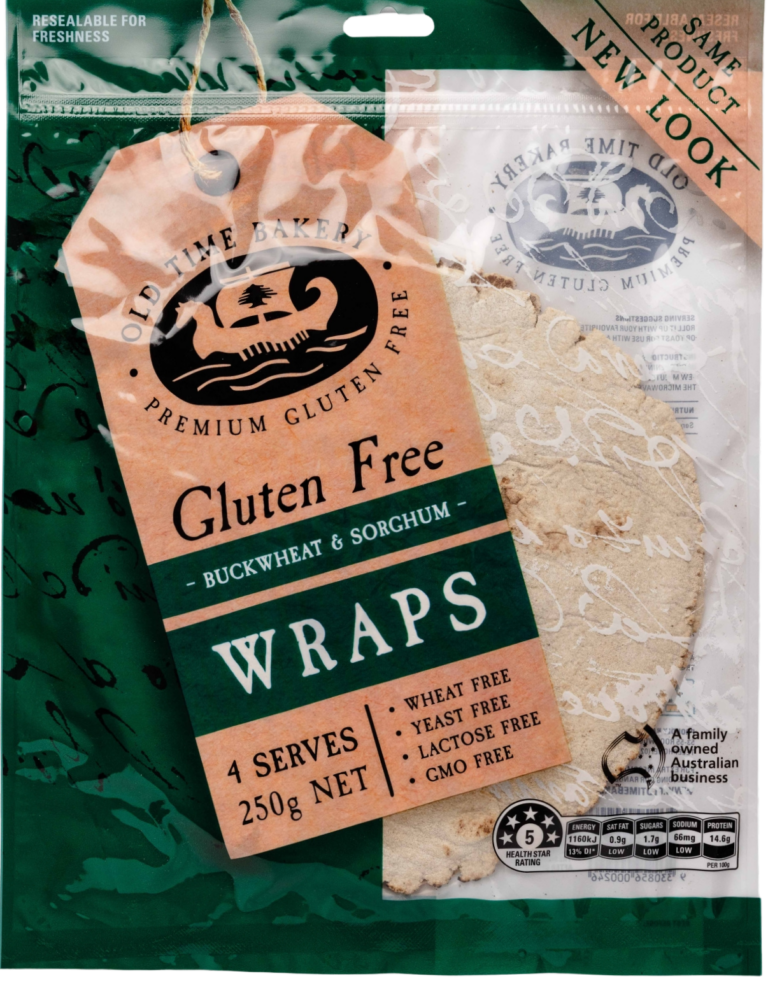
“This gluten-free wrap gets almost everything right for families seeking a real food option beyond the usual supermarket flour wraps. The core ingredients—buckwheat and sorghum flours plus a little soy flour—are whole, minimally processed, and plant-based, boosting both nutrition and fibre. With a remarkable 12.8g of fibre and 14.6g of protein per 100g. It stands out as a genuinely nourishing wrap for all ages. The short, instantly recognisable ingredient list (no industrial oils, added sugar or preservatives) is rare in the gluten-free world. However, it falls shy of the gold standard due to the inclusion of xanthan gum, a low-concern industrial stabiliser that can cause gut upsets at higher doses, and processed soy flour, though it is less worrisome than isolates or concentrates; we do not know if it’s GM or not. That’s why this wrap earns a very strong “GOOD” 4.25/5 RFR rating.“